
Fire Safety & Acoustics
Introduction
In publicly accessible areas and for technical outdoor installations (such as heat-pump enclosures), safety is paramount. Conventional solutions often rely on porous absorbers, which exhibit critical weaknesses under extreme conditions:
Fire load: porous plastics and non-wovens can act as fire accelerants when an ignition source occurs, such as pyrotechnics or an electrical short circuit.
Toxicity: the decomposition of organic insulation materials produces life-threatening fumes.
Pollution: over time, open-pored structures accumulate combustible dust and grease through a wick effect.
Solution
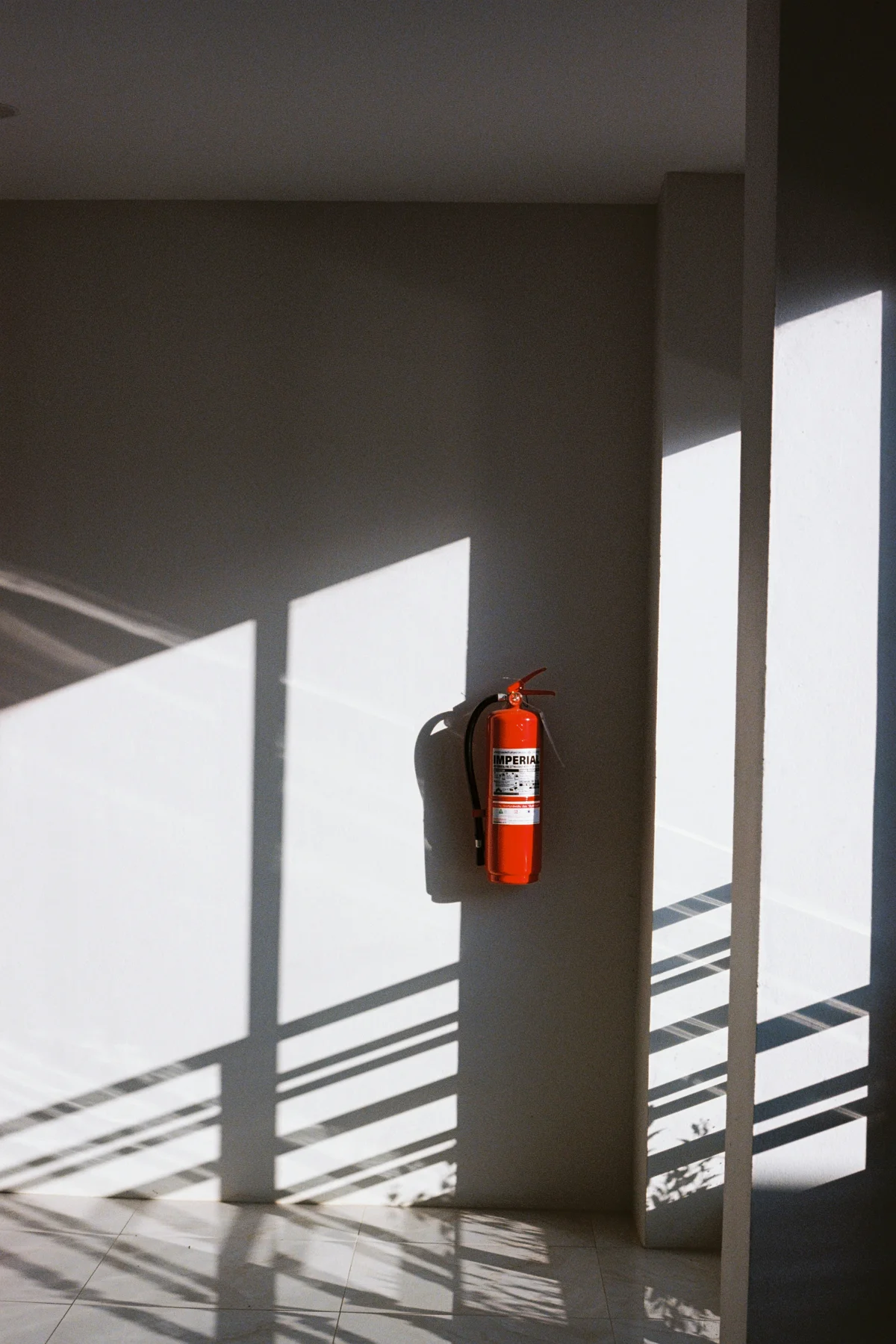
To proactively eliminate these risks, metallic, micro-perforated sound absorbers (Absora-sheet) were examined as a safety standard. Unlike organic foams, Absora-sheet relies on pure physics rather than flammable material volume.
The decisive advantages for safety:
Non-flammability (Class A1): Absora-sheet is made of aluminium or stainless steel. The material is completely non-combustible, produces no smoke and does not contribute to fire spread.
Protection against external ignition: the smooth metal surface offers no point of attack for sparks or glowing particles. Where porous materials would catch fire instantly, Absora-sheet acts as a physical heat shield.
Hygiene & cleanliness: the smooth surface prevents fire-promoting deposits from settling in the material. The micro-perforated structure stays clean and maintenance-free.
Constant acoustics: while conventional materials change their structure when exposed to moisture or heat, the absorption performance of Absora-sheet remains stable and safe for decades.
Results
Using Absora-sheet meets acoustic requirements without increasing the fire load of a building or installation. It is the technical answer to understanding safety not merely as a standard, but as an inherent material property.
Choosing the right absorber material is a decision for safety — metal solutions like Absora-sheet rule out the risks of flammable foams and protect lives.
Applications:
Restaurants & assembly venues: reliable sound insulation for ceilings and walls.
Technical enclosures: protecting heat pumps and air conditioners from vandalism and fire spread.
Industry: acoustic solutions in thermally sensitive areas.